
ChatGPT for Small Business: Is It Enough?
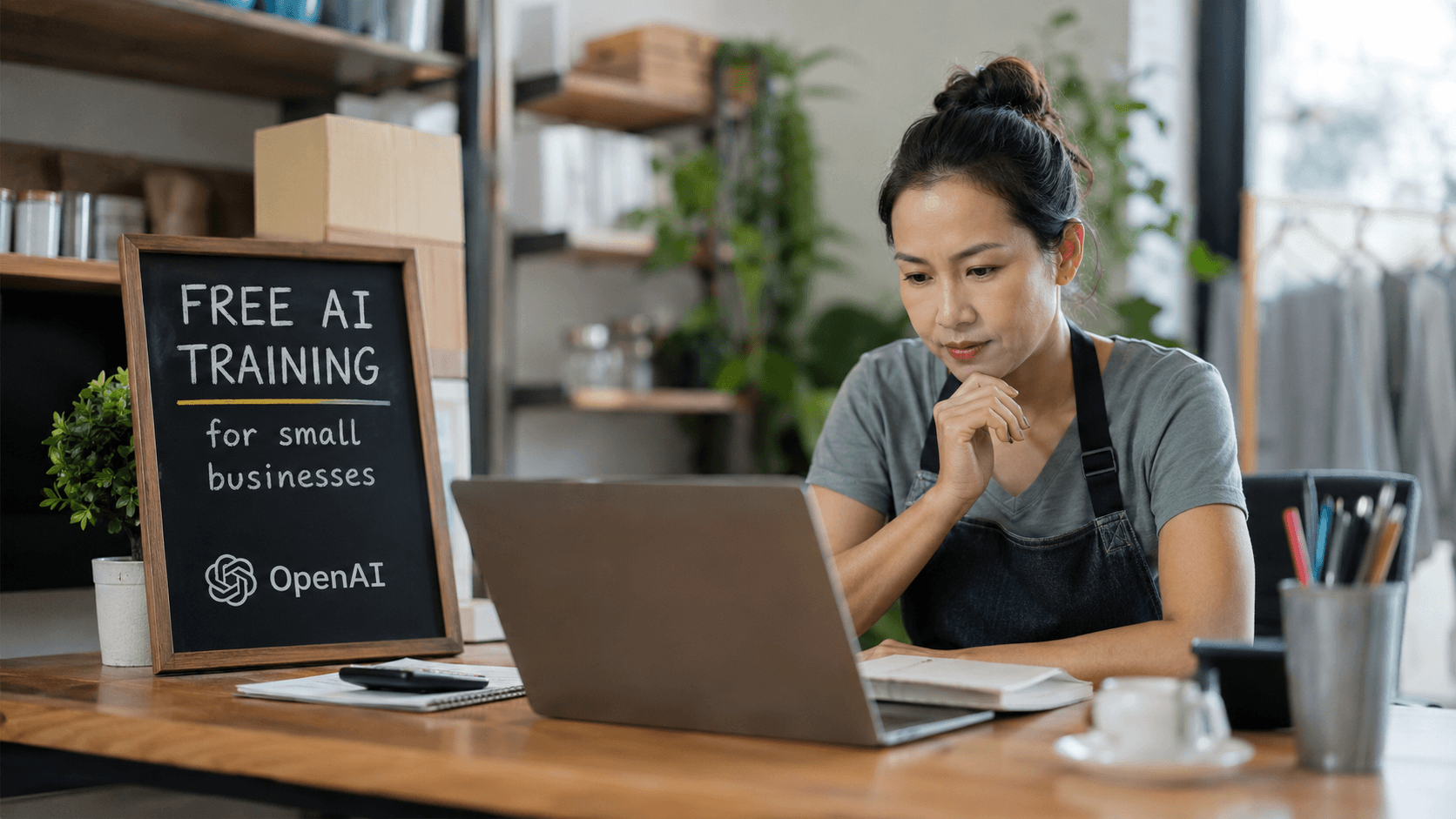
OpenAI just launched a nationwide program to turn small-business owners into AI power users. It’s a good deal. But free training and real results aren’t the same thing, and here’s how a Miami owner or nonprofit leader can tell them apart.
Key Takeaways
- What happened: OpenAI rolled out its ChatGPT for Small Business program: free webinars, in-person “AI Academies,” on-demand guides, and partner integrations (Shopify, Intuit, Slack, Dropbox, and more).
- Why now: Roughly 9 in 10 small businesses already use AI in some form, yet only about a quarter feel confident they’re using it well. OpenAI is racing to close that gap, and to grow its paying base.
- The catch: Self-serve training teaches the tool. It rarely fixes your workflow, your data privacy questions, or the “we tried it and stopped” problem most owners hit.
- The move: Use the free program to build awareness, then get hands-on help to turn it into a habit that saves you hours. That’s the explorer-to-operator jump.
Short answer: ChatGPT for Small Business is OpenAI’s free education program: training sessions, guides, and app integrations designed to help non-technical owners use ChatGPT (and its new “ChatGPT Work” agent) to run their business. It’s worth signing up for. On its own, though, it won’t change how you work.
What OpenAI Launched
In late July 2026, OpenAI announced a dedicated program called ChatGPT for Small Business, and the rollout is still expanding across U.S. cities now. In the company’s own words, AI should be “a force multiplier that extends individual expertise” for owners who are already the marketer, the accountant, the salesperson, and the strategist all at once.
The program has four pieces: product-specific webinars that walk through real use cases in accounting, marketing, and e-commerce; in-person “AI Academies” led by OpenAI Academy (a bigger version of the “AI Jams” it ran in 2025); on-demand guides and short videos with ready-to-use prompts; and a curated set of partner integrations (Dropbox, Shopify, Intuit, Slack, and Atlassian among them) that connect ChatGPT to tools you already run your business on.
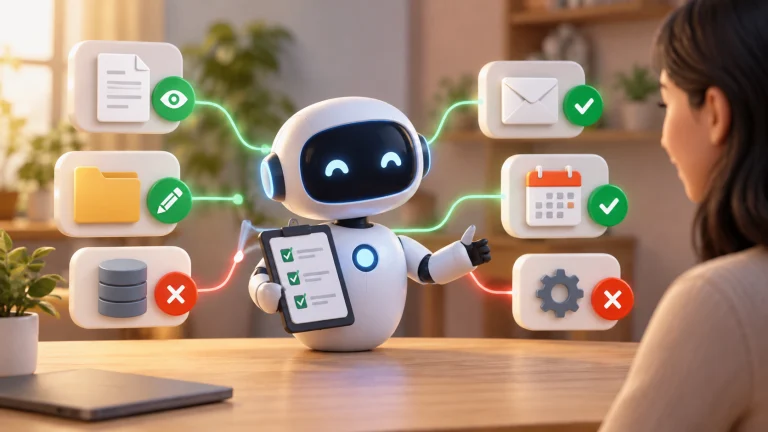
At the center of it is ChatGPT Work, an agent launched in July alongside OpenAI’s GPT-5.6 model. Unlike a plain chatbot, an agent can take on multi-step jobs (analyze a budget, prep for a meeting, turn a pile of customer reviews into a training deck) once you give it permission to see the right files and apps. That “give it permission to see your files” part is exactly where small businesses and nonprofits need to slow down and think, and we’ll come back to it.
Why OpenAI Is Doing This Now
Two numbers explain the timing. First, adoption is already mainstream: the U.S. Chamber of Commerce found that the vast majority of small businesses now use AI in some capacity, with generative-AI use climbing from 23% in 2023 to 58% in 2025, the fastest technology uptake it has tracked since social media.
Second, confidence hasn’t caught up. Only about 27% of small businesses feel confident they’re adopting AI effectively, versus 82% of mid-sized firms. Yet only around 12% invest in any AI training, even though roughly 29% name “lack of training” as their single biggest obstacle (The Lonely Entrepreneur, 2026).
27% of small businesses feel confident they’re using AI well, even though nearly 9 in 10 already use itThere’s also a business reason. OpenAI serves around 900 million weekly ChatGPT users, and by its own CFO’s account, about 95% of them don’t pay (Inc.). Small businesses are a huge pool of future paying customers. Free training is generous, and it’s also a smart on-ramp to a paid product. Worth knowing which funnel you’re in.
Where Free Training Falls Short
OpenAI’s own 2025 sessions reported strong outcomes: 78% of participants built a functional AI workflow and 42% saved five or more hours a week. Those are real results. They also mean a large share didn’t build a workflow, or didn’t keep the hours they saved.
The gap almost always comes down to three things a webinar can’t do for you:
- It doesn’t know your business. A demo automating “a marketing task” isn’t the same as automating your quoting process, your donor thank-you letters, or your intake forms. Generic prompts produce generic results.
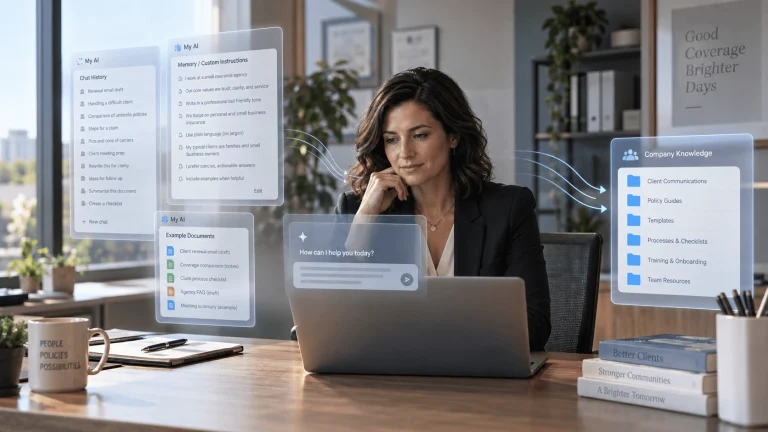
- It doesn’t answer the data question. ChatGPT Work gets powerful when it can see your files. But for a law office, a clinic, or a nonprofit holding client, patient, or donor records, “what am I allowed to share with this tool, and what should stay private?” is the first question, not an afterthought.
- It doesn’t build the habit. More than half of small businesses describe themselves as AI “explorers”: they poke at tools, feel a flicker of possibility, and then nothing changes. Only about 8% reach advanced adoption. The tool was never the hard part; turning it into a daily habit is.
Self-Serve Training vs. Hands-On Help: How to Choose
Both have a place. The trick is matching the format to where you are. Here’s a plain-language comparison:
| Free self-serve (OpenAI webinars & guides) | Hands-on workshop (e.g., Digismart) | |
|---|---|---|
| Best for | Getting oriented; understanding what’s possible | Turning “possible” into a working process for your business |
| Content | General use cases and demo prompts | Your actual tasks, tools, and team’s real workflows |
| Data & privacy | Not tailored to your situation | Guidance on what to keep private and how to set it up safely |
| Accountability | You watch, then you’re on your own | Someone walks it with you until it sticks |
| Cost | Free (time investment only) | Paid, but aimed at hours saved and mistakes avoided |
| Result | Awareness and inspiration | A habit, a workflow, and a team that keeps using it |
A simple rule: if you’re not yet sure what AI could even do for your business, start with the free stuff. It’s excellent for that. If you’ve already “tried ChatGPT” a few times and quietly stopped, more videos won’t fix it. That’s a sign you need the fit-and-follow-through help, not more introductory content.
A Better Way to Start This Week: the S.M.A.R.T. Prompt
Whether you learn from OpenAI’s webinars or from us, the single biggest upgrade for a non-technical owner is writing better prompts. Most disappointing AI results come from vague, one-line requests. At Digismart we teach a simple checklist we call S.M.A.R.T. so a prompt reflects your business:
- S – Set the scene. Give ChatGPT a role and context: “You’re my marketing assistant for a family-run Miami HVAC company.”
- M – Mission. State the exact task and the goal: “Write a 150-word email inviting past customers to book a summer AC tune-up.”
- A – Audience. Say who it’s for and the tone: “Friendly, plain English, for homeowners aged 40-70.”
- R – Rules. Add constraints: “No jargon. One clear call to action. Don’t invent prices or guarantees.”
- T – Test & tune. Read the result, tell it what to fix, and run it again. The second draft is almost always the keeper.
Try that on one real task today. A one-line prompt gives you “that’s generic”; a S.M.A.R.T. one usually gives you “I could send this.”
The Miami Angle
Miami’s small-business and nonprofit scene runs on lean teams: bilingual customer service, seasonal swings, tight margins, and a lot of owners wearing every hat. National webinars at a fixed time, in English, on generic examples, don’t always meet that reality. Local, hands-on training can work in your language, around your season, on the tasks that eat your week. It can also address the privacy questions that matter for the clinics, firms, and community organizations that hold sensitive records. Use OpenAI’s free program to get inspired; use local help to make it real.
Frequently Asked Questions
Is ChatGPT for Small Business free?
Yes. The training program itself (webinars, guides, in-person AI Academies, and videos) is free. Note that some of the more advanced tools it teaches, like ChatGPT Work and higher usage tiers, run on OpenAI’s paid business plans. The education is free; getting the most from the tools may not be.
What is ChatGPT Work, and how is it different from regular ChatGPT?
ChatGPT Work is an “agent” that can complete multi-step tasks end to end (analyzing a budget, prepping a meeting, drafting materials from your files) rather than answering one question at a time. It becomes powerful once you connect it to your apps and documents, which is also why you should think carefully about what data you give it access to.
Is it safe to give ChatGPT access to my business files?
It can be, with the right setup, but it depends on your data and your obligations. Businesses that hold client, patient, donor, or case records should decide in advance what stays private and use appropriate business-tier settings rather than free consumer accounts. If you’re unsure, that’s exactly the kind of question a hands-on session should answer before you connect anything.
Do I still need a workshop if OpenAI’s training is free?
The free program is great for awareness and general skills. A workshop earns its keep when you need AI applied to your specific workflows, your data privacy situation, and your team’s habits, the things a one-size-fits-all webinar can’t cover. Many owners use both: free training to explore, hands-on help to operationalize it.
My team tried ChatGPT and stopped using it. Why?
That’s the most common pattern in the data: most owners stall in the “explorer” phase. It usually isn’t a talent problem; it’s that no one turned experimentation into a repeatable, role-specific habit. Picking one high-volume task, building a solid prompt for it, and practicing until it sticks is what converts a novelty into real hours saved.
Where can Miami small businesses and nonprofits get hands-on AI help?
Digismart runs practical, no-jargon AI workshops for non-technical owners and nonprofit teams in Miami, built around your real tasks and your data. You can book an AI workshop here.
Turn free AI training into real results
OpenAI can teach you the tool. We help your team use it: on your workflows, with your data, until it sticks. Practical, plain-English AI workshops for Miami small businesses and nonprofits.
Book an AI WorkshopSources
- Inc. – “OpenAI Just Unveiled a Massive Push to Turn Small-Business Owners Into AI Power Users”: inc.com
- StartupHub.ai – “OpenAI Launches ChatGPT for Small Biz”: startuphub.ai
- OpenAI – “ChatGPT for your most ambitious work” (ChatGPT Work): openai.com
- U.S. Chamber of Commerce – “Empowering Small Business: The Impact of Technology on U.S. Small Business”: uschamber.com
- U.S. Chamber of Commerce (CO – ) – “AI Is Powering Small Business Growth in 2026”: uschamber.com/co
- The Lonely Entrepreneur – “Small Business AI Statistics 2026: 58% Use It, 27% Ready”: lonelyentrepreneur.com